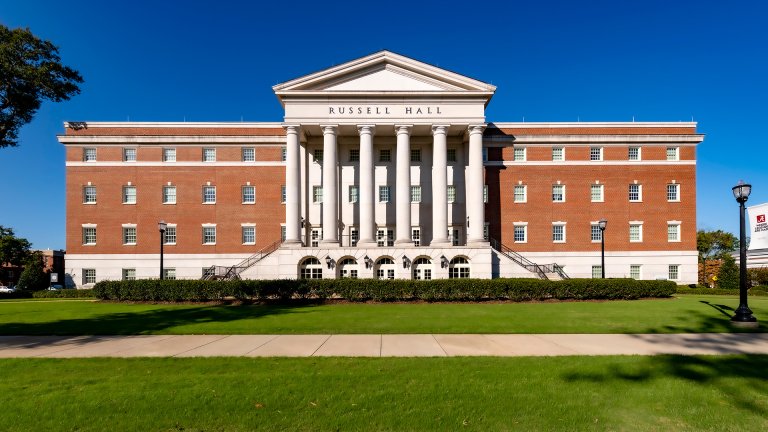
I have served as a design review consultant at the University of Alabama since 2004. During that time I have advocated for re-skinning regrettable buildings instead of demolishing and rebuilding them for a number of reasons based on sustainable building practices, including cost conservation because why demolish and rebuild a building when the lovability problem is only skin-deep? During the past couple decades we've re-skinned quite a number of buildings successfully, but sometimes it just doesn't work out because the building's design DNA doesn't lend itself to a skin-deep solution. This is the story of two campus buildings, one which became a shining star of re-skins, and the other which ended with implosion.
I hope this story raises useful issues dealing with recycling, repurposing, and reusing. To be clear, here's what I mean by these terms:
GOOD: Recycle. Restaurant becomes metal, wood, brick. Mortar and lots of other stuff is lost.
BETTER: Repurpose. Restaurant becomes loft. Equipment sold secondhand.
BEST: Reuse. Restaurant becomes another restaurant. Change sign & some equipment.
The only option with implosion is recycling. Re-skinning is most similar to repurposing, but is a bit more invasive because you are at best recycling the skin that gets removed. Put another way, re-skinning is a hybrid between recycling the skin and reusing the interior if the building remains in the same department and the interior doesn't have to be rebuilt to change from classrooms to laboratories, for example. Let's start with the re-skin.
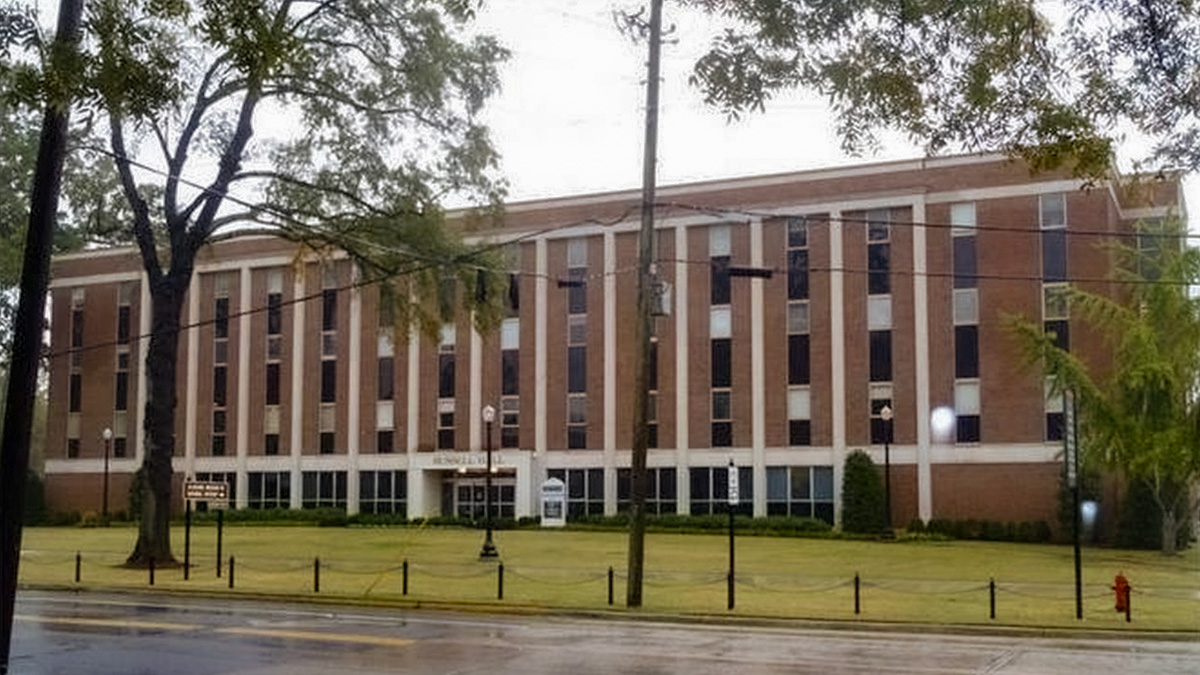
This is what Russell Hall looked like when built in 1968 in the depths of the Dark Ages of Architecture, after all wisdom of designing lovable buildings had been lost in the Great Decline. While the trustees wanted the design to reflect long-loved buildings around the Quad, the architecture profession was utterly incapable of delivering lovable designs in those days. As they say down South, "bless their hearts; that's the best they could do!"
Russell was remodeled in 2011, seven years into my tenure as an outside consultant. We had re-skinned other buildings before that, but by that time I was able to open up the entire toolbox. For example, if you look closely at the title image above, you'll see that the windows have unusually squatty proportions for a classical building in the South where they were usually taller to assist with passive ventilation. But in order to do as little interior interventions as possible, I chose to have the architect keep the ill-proportioned window openings and do subtle detailing around them to compensate, especially at the upper level.
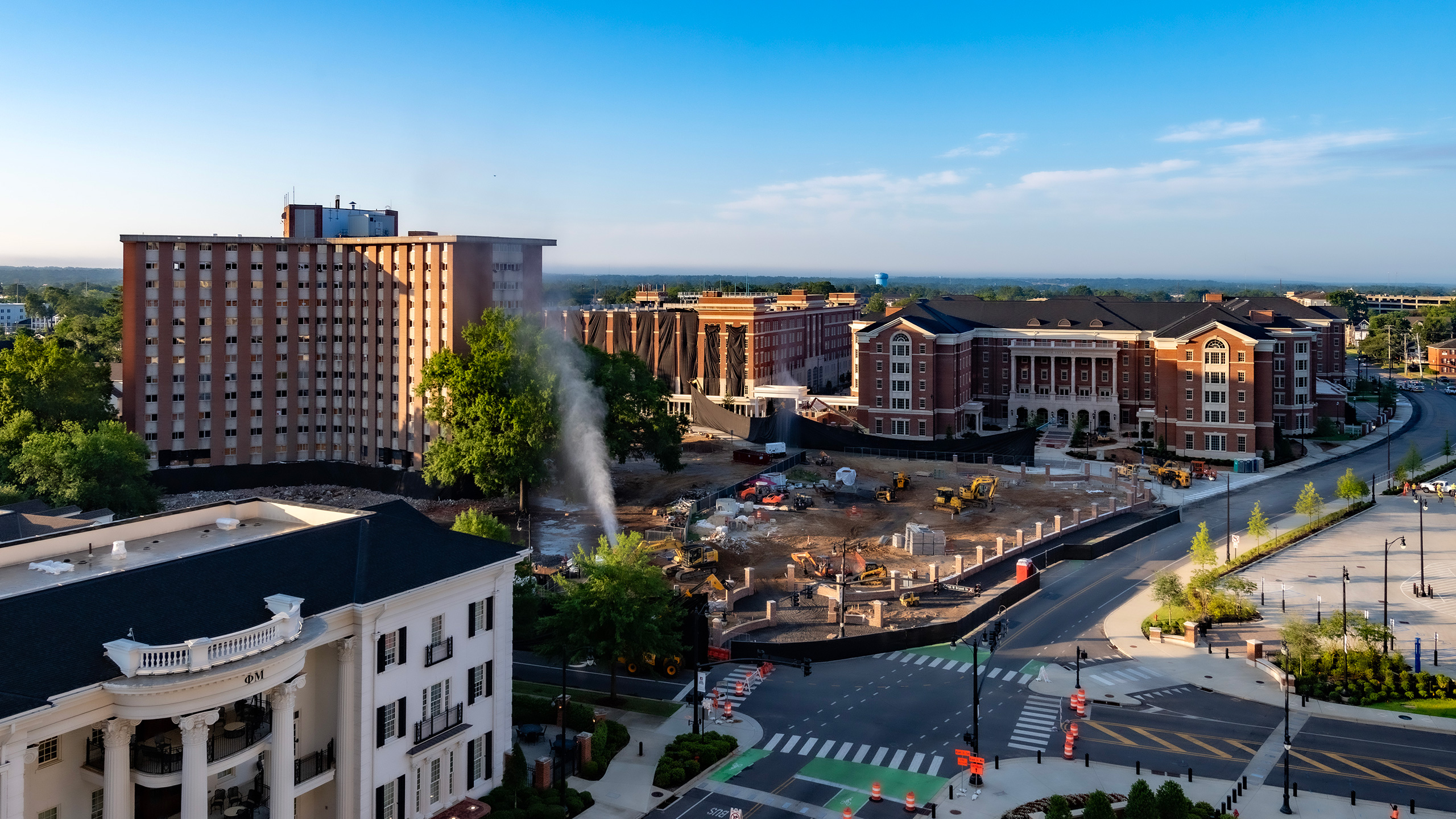
This is Implosion Morning with the despised Tutwiler Hall on the left with just minutes left to stand, still looking like nothing so much as a Soviet-era apartment block and known derisively in some circles as "the commie block." The new Tutwiler which replaced it at the beginning of the next school year is the classical brick building to the right.
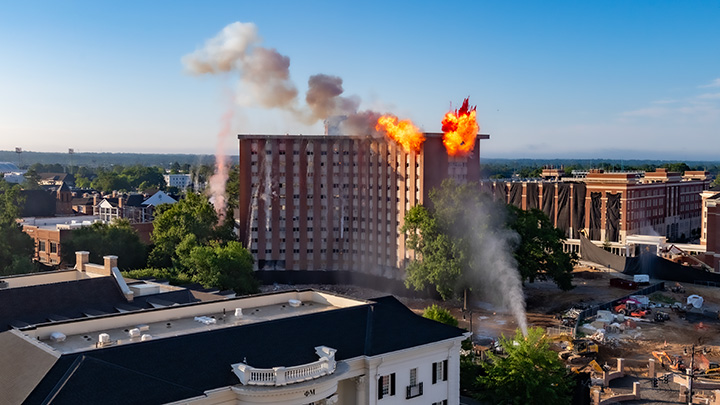
I've never known whether the ring of explosions around the top of the building were just the demo guys having some fireworks fun because it was the Fourth of July, after all, or whether it was a final act of defiance against ugliness in what had for decades been widely despised by so many as the ugliest building on campus, but if you took a poll, Tutwiler would have taken that title in a landslide with well over 90% of the vote. So implosion is the fate of the unlovable when the massing means re-skins won't work. Technically, the asbestos throughout the building didn't help its case, either.
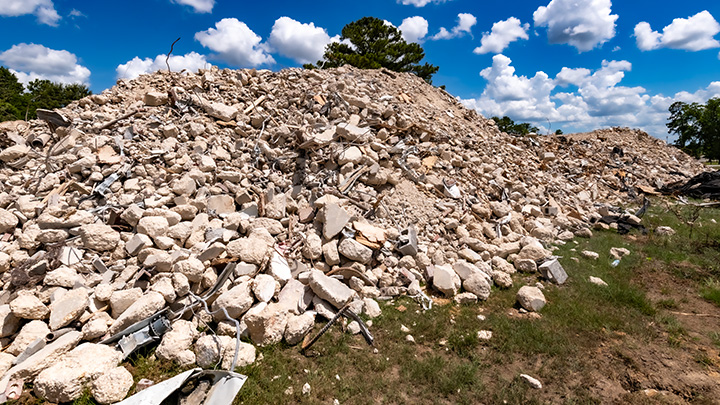
This was Tutwiler Hall being recycled. A blocks-long pile of debris on an out-of-the-way part of campus. Most of the metal had been removed when this picture was taken; when that work was completed, the concrete, concrete block, and brick was crushed to become roadbed fill. This is the end state of recycling: a structure that housed thousands of freshman women for decades, even if deeply despised, but in any case reduced from a higher-utility product (a building) to a much lower-utility product hidden beneath asphalt paving, in this case. So yes, recycling is technically a good thing... but a far, far less good thing than either repurposing, reusing, or the hybrid that is re-skinning.

