
Walk Appeal
Do you want coffee that’s just drinkable? Or a meal that’s merely edible? Or would you buy a book that's only readable? Of course not! We want things that are aromatic, delicious, and engaging! So why should we settle for places that are merely walkable? Just like we love food and drink that’s delicious and books that are enthralling, people strongly prefer a place where it's appealing to walk... or even a joy to walk!
The design of Seaside, Florida by DPZCoDESIGN was the opening act of the New Urbanism in 1980. Walkability was a high ideal of the New Urbanism in the decades that followed because walkability was a rare commodity in those years. Eventually, the New Urbanist track record grew strong enough that not only were its places reliably walkable, but the ripple effect brought varying degrees of walkability to conventional development as well. Today, almost all developers talk walkability even if some of them don't walk the talk. And Walkable neighborhoods are now the most coveted in real estate.
Isn't it about time to move on to a higher standard? We believe so. Building a walk-able place (where you are able to walk) is no longer special today. Walk Appeal is that standard; achieve Walk Appeal, and you've created a place where you're not just able to walk, but it's also appealing to walk there as well. Think of Walk Appeal as "walkability on steroids," or if you're not into steroids, consider Walk Appeal the "walkability superfood."
Those who live in the city don’t have the need for speed because they’re already there. Why should the suburbs get to impose their need for speed on the city? Especially since it makes the city a less sustainable place and kills Walk Appeal? This is a major issue because most Walk Appeal measures work against high-speed automotive traffic, setting up conflicts between out-of-town commuters and those enjoying cities with high Walk Appeal. Because Walk Appeal is a major driver of a Prospering Society, cities focused on finance have strong motivation to privelege Walk Appeal. Walkable neighborhood businesses cannot thrive in places with low Walk Appeal, condemning those places to auto domination and big box stores, which are usually discarded by retailers once they're fully depreciated, leaving decrepit wastelands behind. Look around; every city has them.
There's more beyond this two-part potential conflict that cities should consider. See Living in the City toward the bottom of this page for several solutions deployable by cities, their suburbs, and country towns beyond which can help each place type live its best life.
No place with only a single mode of transportation is sustainable unless that mode is walking. And high Walk Appeal is necessary to support this condition.

Walk Appeal Principles
Urbanism can tip the balance in favor of enticing people to walk by following these proven principles, but we have several choices to make. For example, boredom or pedestrians - take your pick. You can't have both on a street. Pedestrians don't like to be bored, and will stay home if your street isn't interesting. Walk Appeal thrives on interesting streets. Build Walk Appeal in a neighborhood and greater prosperity is likely to follow because many good things happen in places people love to walk. Places with inherently low Walk Appeal like many production-builder subdivisions tend to have low upsides.
For most of the decades since 1945 sprawl was easy to spot because it was the places with no sidewalks. Now, billions are spent on sidewalks that will never be used. The key to walking isn’t just the sidewalk, but what surrounds it both on the street side and the building side.
Auto domination and Walk Appeal are inversely proportional. Want more of one? Decrease the other. Most of the lives lost and bodies maimed have city streets, not country roads, as the setting. In any case, Street Violence and Auto Domination go hand in hand. In places where everyone walks, nobody ever dies in a crash. It’s just “oh, excuse me!” when two pedestrians collide.

A Famous Metric Fallacy
This is Clarence Perry's Neighborhood Unit diagram, developed a century ago. It was the basis for many neighborhood designs of the 1920s and forward. Its basic metric is the quarter mile walk from edge to center, long considered to be the distance an American would walk instead of drive. The quarter mile walk is still the standard today on most New Urbanist designs, but is set to be dislodged by Walk Appeal because the distances people walk vary greatly according to the appeal of the walking experience.

Rome Walk Appeal
This is Rome, with both radii centered on Piazza del Popolo. The quarter mile radius is yellow, representing the distance a typical American will theoretically walk, but if you go to Rome and watch how Americans behave there, you'll see that they follow the ancient proverb "when in Rome, do as the Romans do." In other words, they happily walk to the Vittorio Emanuele at the bottom of the image just outside the green radius... and then happily keep on walking.
Power Center Walk Appeal
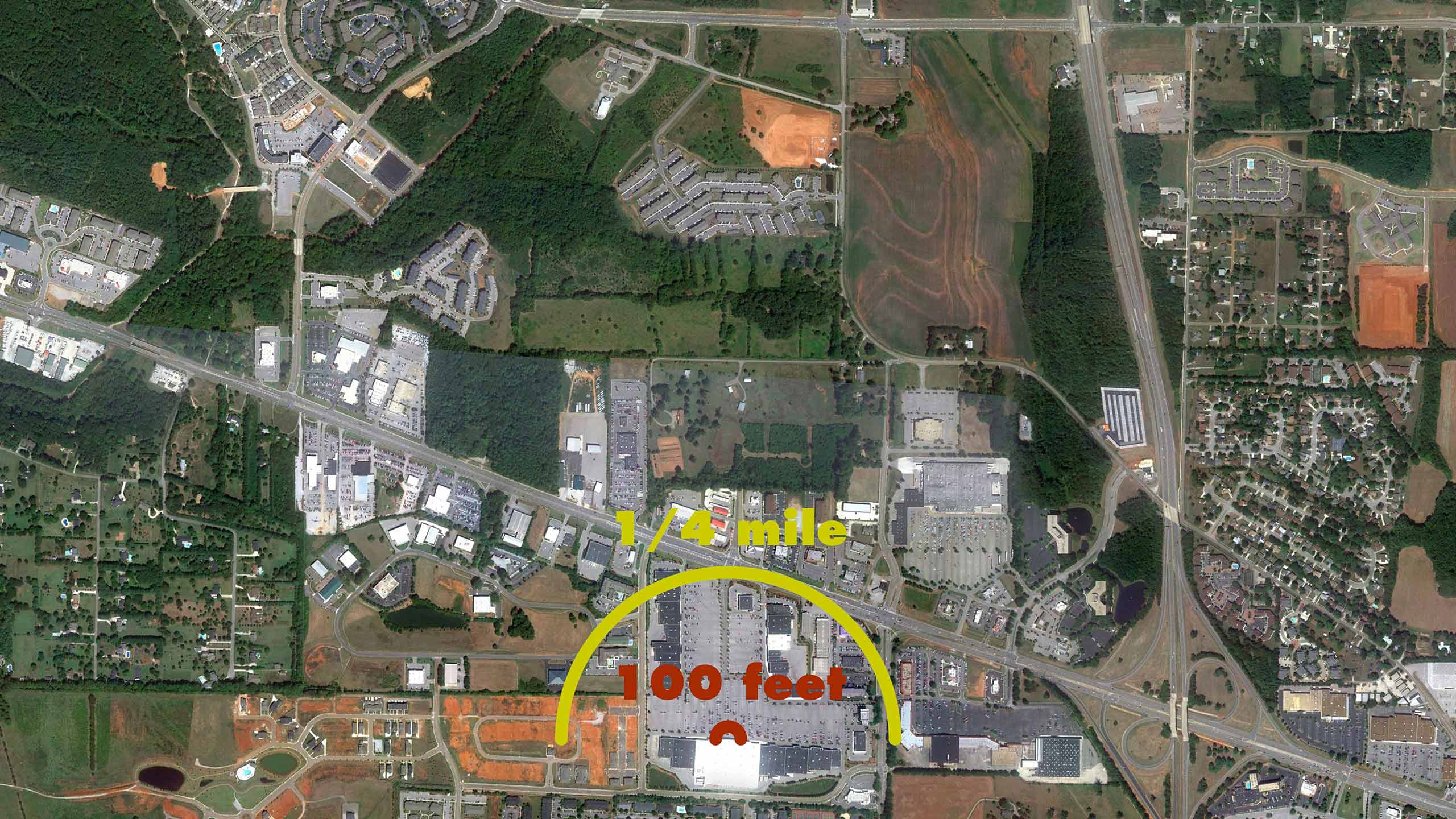
This is a power center in Huntsville, Alabama, but it could be anywhere. The yellow radius, like the one in Rome, is a quarter mile. But the actual distance people will walk at a power center, while pegged in theory at a hundred feet, is actually "as little as possible." Obviously, power centers have little power to entice people to walk. For the full range of Walk Appeal settings from Great Streets to Unwalkable, see Walk Appeal Conditions below.

Frontage Engagement
The geometry of a building frontage can have great effect on how people interact with each other in public. These women are having a conversation because the woman on the porch felt comfortable enough to sit there as people walked by on the sidewalk. Had she felt uncomfortable, the conversation never would have happened.
The code which produced this setting is a result of several years of what I call "country-boy research" where I looked for signs of life on porches, then whether or not those signs existed, I stepped off the distance from sidewalk to porch and measured the porch height. I was eventually able to generate the charts in the post which lay out the curves above which signs of life occur and below which they do not.
Neighborhoods which get these geometries right tend to be those where people know their neighbors for blocks around. In those where these things are wrong, people might only know the neighbor to either side and one across the street. And someone you don't know isn't really a neighbor; they're more of a subdivision co-habitator.
Health of Place
Walk Appeal contributes mightily to Health of Place on three counts: Economic Health, Environmental Health, and Public Health.
Healthy Walk Appeal drives the prosperity of neighborhood businesses, and can even make the difference between failure, surviving, and thriving. And those neighborhood businesses have many benefits for the neighborhood, including eliminating food deserts, allowing people to make a living where they’re living, letting people walk to daily needs, and keeping the neighborhood safer because there are more eyes on the street.
Good Walk Appeal benefits the environment in several ways, especially including these two: It’s obvious that every trip on foot or on a bike burns fat instead of gas, keeping us healthier and wealthier, and keeping the air cleaner. What’s not so obvious is that when we spend time outdoors, we get acclimated to the local environment so that when we return indoors we may be able to throw the windows open and leave the air conditioner off. And there is no equipment so efficient as that which is off.
The greatest benefit of strong Walk Appeal, however, is what it does to our bodies. Places where people walk 10,000 steps per day as part of their daily activities have been proven to be healthier than those where people walk less, all other things being equal. Our obesity epidemic has ballooned as our walking has dwindled, and it brings many life-threatening illnesses such as heart disease and diabetes.
Finding a characteristic of the built environment that has such a powerful influence for good in making us healthier, or making our environment healthier, or making our neighborhoods healthier is wonderful. Finding a characteristic that does all three is far better. Walk Appeal is that characteristic, and it’s time to start improving it all across America.

Tactical Beginnings
Transforming a conventional auto-dominated street to one with high Walk Appeal has most often begun with Tactical Urbanism measures in recent years. This is the most celebrated Tactical transformation of all: Broadway in Manhattan. The tables, chairs, and umbrellas are famously inexpensive, and the amount of pavement given to the people contributes mightily to slowing the cars on the auto traffic lanes that remain.

Block Scale
How long does it take you to walk around a block at an easy pace in a recovering neighborhood? If it's five minutes or less, look for a place to live. If it's four minutes or less, open your shop there. If it's three minutes or less, quick... open a sidewalk cafe! The time it takes to walk around a block is a simple indicator of a complex condition: smaller block sizes are harbingers of strong future Walk Appeal for one simple reason: the more often you reach another intersection, the more frequently you have a choice of which way to go, which makes your walk far more interesting than having to walk a long distance for a choice.
The key point here is that identifying strong Walk Appeal is great, but finding base conditions which contribute to future Walk Appeal is better because that ability helps you focus your resources where they are likely to produce the strongest results.

Indianapolis, but not the 500. Coulda been a great street, but chose to be a fast street. Every community has this choice.
Danger
No matter how beautiful the path where people walk, no matter how complete and cooling the canopy of street trees, and no matter how handsome the street furnishing and civic art, perceived danger trumps them all. Automobile traffic speed is the universal danger. In the seven Walk Appeal conditions just below, an increase of just 20% in vehicular speed drops the Walk Appeal of the thoroughfare to the next lower condition. A Great Street should have traffic at no more than 15 miles per hour, where the risk of serious injury or death from being hit by a car is close to zero. But if traffic speed increases just 20% to 18 miles per hour, the Walk Appeal of a Great Street drops to that of a W-5 Main Street. Following this all the way to the bottom, a thoroughfare indistinguishable from a Great Street in any physical characteristic that allowed vehicular speeds of 45 miles per hour or more would have the worst Walk Appeal rating of W-0, which is Unwalkable. No matter the beauty, people don't want to be right beside sudden death.
There's one important caveat: the speed that matters is in the travel lane closest to the walking path. A Parisian boulevard moved cars at lethal speeds in the middle travel lanes the last time I was there in 2016, but cars on the slip roads at the edge with parking on both sides moved not much faster than walking speed, so sidewalk cafes flourished with high-speed traffic only four lanes and one median away.
Substantial physical barriers between automobile travel lanes and sidewalks create comfort commensurate with the mass of the barrier. Mature street trees are great at this, but there's a catch: transportation engineers consider trees to be "fixed hazardous objects," so they do everything they can to ensure that any street tree planted will not grow large enough to imperil the driver. No matter the impact on anyone else. We experienced this firsthand in the Flamingo Park Neighborhood's struggle against the Florida DOT. The DOT conceded to a median, but allowed only one street tree per median right in the middle of the block and mandated highly-packed soil around the tree so it would never grow much thicker than your thumb. For this and many other auto-domination decisions in the Alton Road rebuild, carnage has ensued.
Fortunately, street trees are not the only effective barriers. On-street parking is now a highly unpopular option in places that have moved beyond auto domination, but in the great majority of the US which still suffers from auto domination, on-street parking is far better than surface parking lots for several reasons. Protected bike lanes are another effective barrier if they're truly protected by something that would deflect a car away from the cyclists.
Vehicle size has always been an issue, because there's no appeal to walking alongside a truck route. But heavy trucks are a small percentage of total motor vehicles on the road, so it's fairly easy to restrict them to certain routes, keeping them off Main Streets and residential streets. Recently, however, pickup trucks and SUVs have become larger than Sherman Tanks. And to compound the size problem, most new trucks and SUVs have a new front end design that's close to vertical. For decades, most vehicles had a wedge-shaped front end for aerodynamics and the accompanying fuel economy. If those vehicles hit a person, they would usually bounce up and over, therefore having a chance of surviving. But occasionally a deer would come through the windshield, injuring those inside. This new design changes the trajectory, mowing down any creature hit and crushing it under the wheels. If these vehicles drive in the country and the creatures hit are mostly deer and mountain lions, that's one thing. But if driven in the city, the victims are much more likely to be old folks and children whose heads aren't even visible above the hoods of the vehicles, hence the terms "killer grilles" and "kidmowers." Places with a preponderence of supersized vertical-front vehicles degrade Walk Appeal as much or more than speed, in large part because they can go everywhere, not limited to truck routes. Or should they be?
The last danger issue is crime. Places known to be crime-ridden reduce Walk Appeal to nearly zero for anyone except its residents, who are only marginally more likely to venture out on foot or bike. Several of the tools for building Securable Places will help, but none of this is an ironclad solution to lawless places. For now, those walking should choose different routes.
Walk Appeal Conditions
The following are the six paradigmatic Walk Appeal conditions from best to bad, plus the very worst (W-0 Unwalkable) closing it out.

W6 - Great Street - 2 Miles
A Great Street is thronged with people, but not too many. Cars may be entirely crowded out, there should still be room for people biking gently. Europeans are reputed to walk much further than Americans, but it's for this reason: their streets have much better Walk Appeal. Put a Parisian accustomed to walking five miles or more per day on a suburban American cul-de-sac, and they wouldn't walk much there, either!
W5 - Main Street - 3/4 Mile
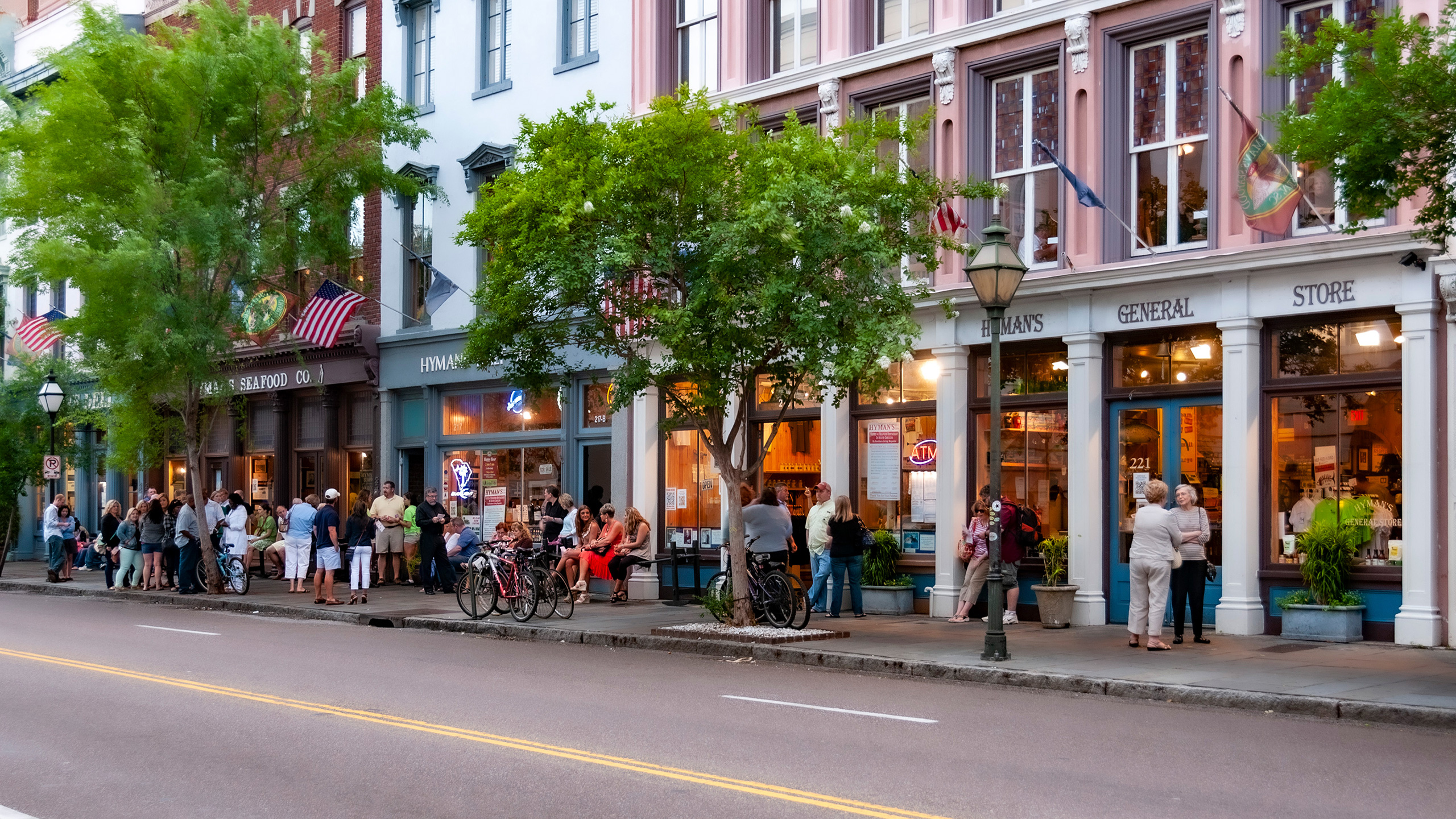
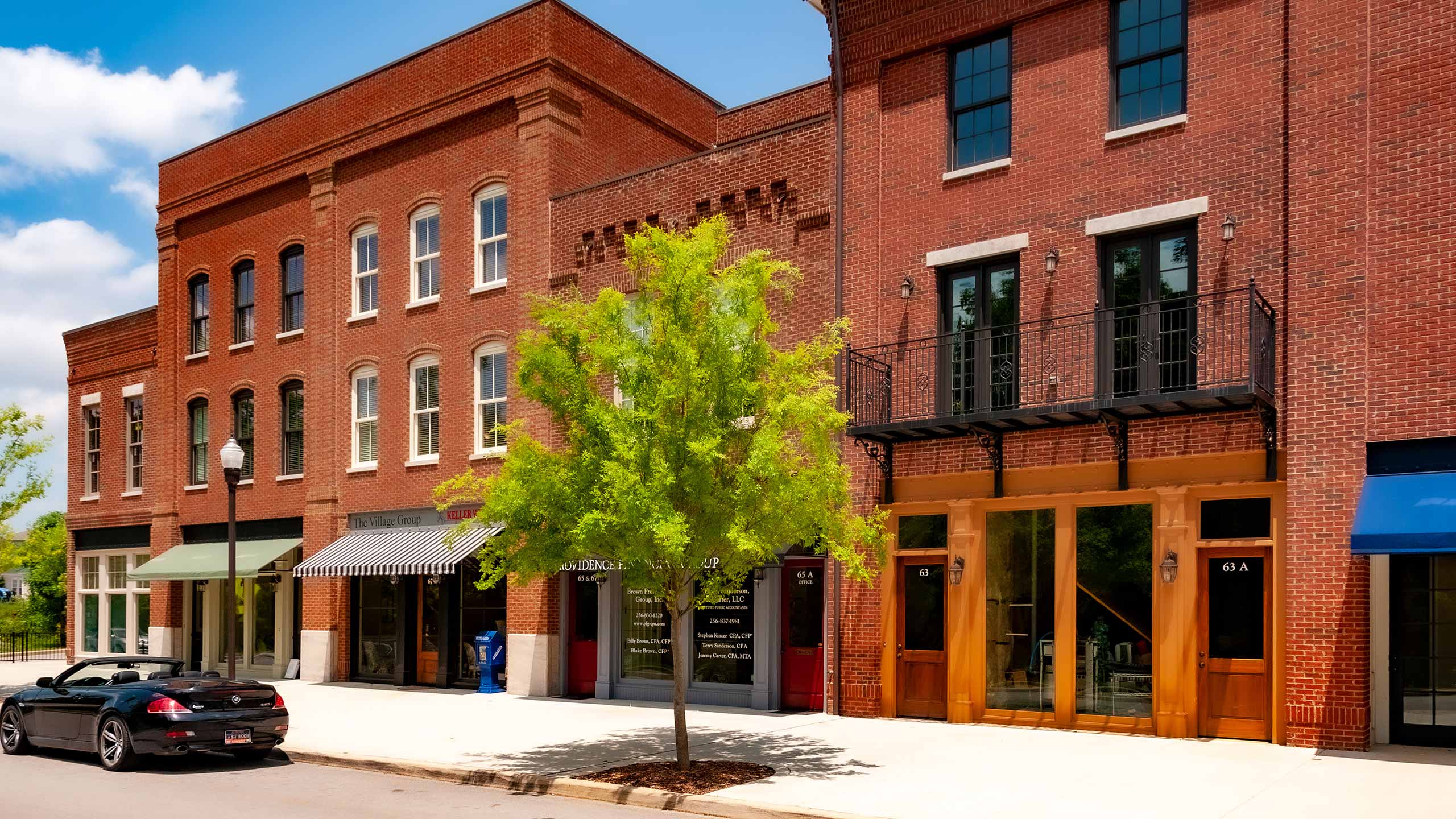
People will walk about 3/4 of a mile on a good American Main Street, which is usually found in Transect Zone T5. Good streets in T5 pull buildings right up to the sidewalk, and most of the buildings are fairly narrow because real estate is usually expensive in T5. Narrow storefronts change the walkers' view frequently, which is more entertaining than long blank walls or long stretches of the same building. New Urbanists from Australia have for years been advocating for an "elongated pedestrian shed" along Main Streets or High Streets. Walk Appeal shows precisely why they'e been right all this time: the Walk Appeal is stronger there.

W4 - Neighborhood Street - 1/4 Mile
A good street in a traditional neighborhood T4 Transect Zone is where the 1/4-mile walking radius is actually accurate. The buildings aren't right up on the sidewalk like they are in T5, so it takes a few more seconds of walking for your view to change substantially. Fences, Hedges, and frontage walls all increase Walk Appeal in Transect Zone T4 because they're right beside the sidewalk, where the view changes fastest. They also make people feel more comfortable sitting on the porches, so they're more likely to get acquainted with people walking by, as we discussed here.

W3 - Sub-Urban Street - 1/10 Mile
Sub-Urban streets in Transect Zone T3 allow houses to pull further away from the sidewalk, so your view changes slower. This is compounded by the fact that the lots are larger, so it takes longer to get from one house to the next. Hedges and especially fences are less frequent in T3 (I had to hunt awhile for this suburban image, with both fence and hedge,) and frontage walls are almost nonexistent. The walking distance, therefore, drops to 1/10 of a mile in T3.
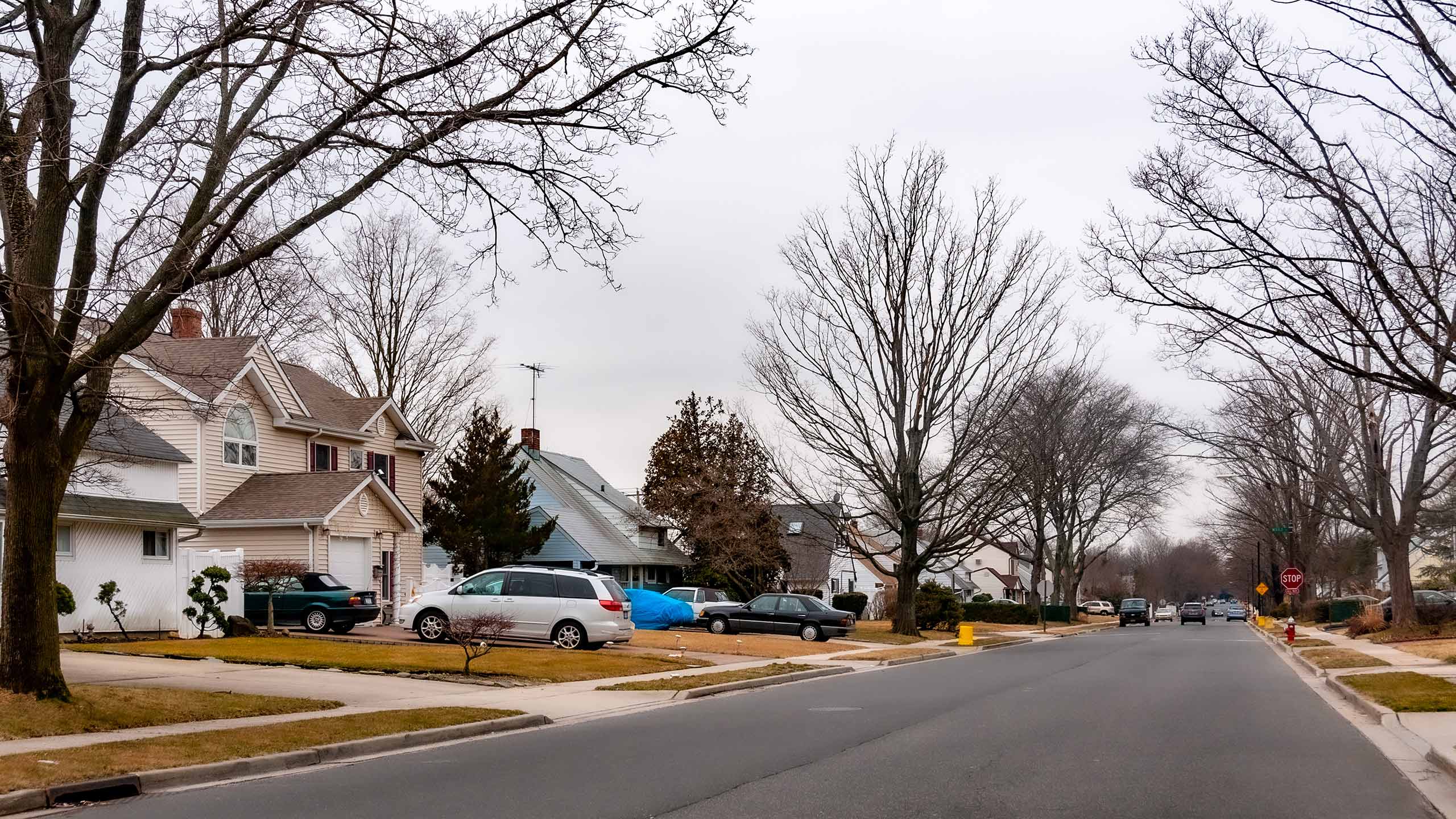
W2 - Subdivision Street - 250 Feet
It's possible to build entire subdivisions to the T3 Transect Zone standard, but most of them aren't even that good. Instead, typical subdivisions have for decades sited houses even further from the street, with no fences or hedges at all. Some don't even have sidewalks, a problem compounded by the wider and therefore faster streets. In these places, people are doing well to walk just 250 feet. In other words, you're likely to walk only far enough to see four or five neighbors on either side of you. Everyone else in the place isn't really your neighbor because you don't even know them. Instead of calling them neighbors, we should instead say "they're my subdivision cohabitators."

W1 - Parking Lot - 100 Feet
People won't walk across a sea of parking to get to another store because the walking experience is simply too dreadful. This is exacerbated by the fact that a sea of parking is a heat island, capturing and storing the sun's heat in all that dark asphalt, raising the temperature of the air above it by dozens of degrees in summertime. A sea of parking is also a huge stormwater runoff problem, and is most often solved by building really ugly stormwater retention pits nearby. If you don't know what they are, a retention pit is a depression several feed deep in the ground, usually surrounded by an ugly chain-link fence, where all the styrofoam cups, packing peanuts, and plastic wrapping collects after a rain.

W0 - Unwalkable
The worst sidewalk you could possibly choose to walk on is one with an arterial thoroughfare on one side and a parking lot on the other. I use a Walk Appeal distance of 25 feet, but in reality, you're unlikely to ever walk in a place like this unless your car breaks down. Not only does it terminally bore you and leave you constantly awash in a sea of car exhaust fumes and sweating uncontrollably from the heat in summer, but it also is an incredibly dangerous place to walk. So people don't.
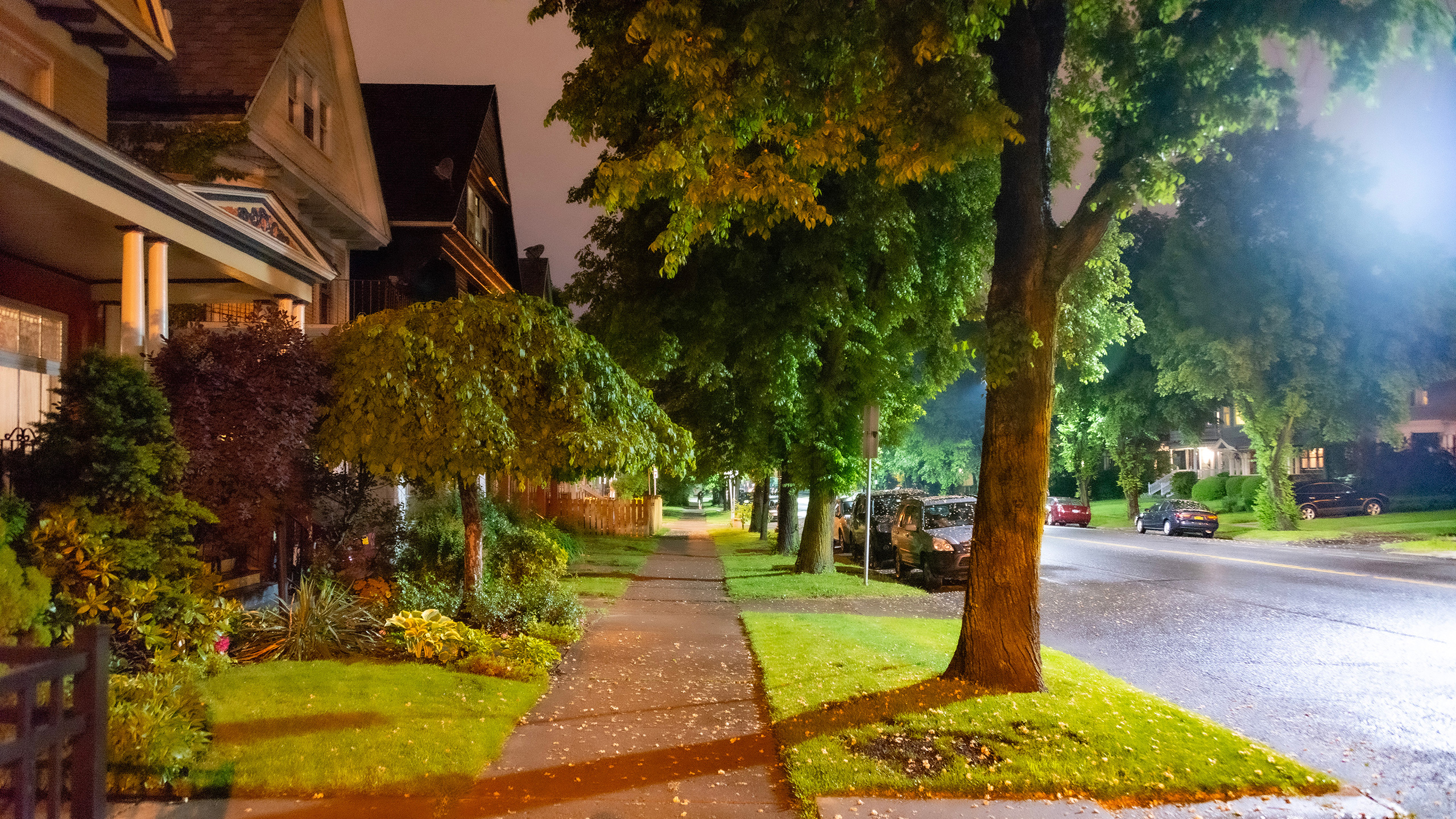
Walk Appeal Indicators
Can you walk to buy fresh vegetables? How many minutes of walking takes you to your morning coffee? Are the streets along the way shaded in summer? Or can you walk to these places at all? Find street performers and you’re likely in a place with high Walk Appeal surrounded by good urbanism. Has anyone ever in the past century seen a mime in a Walmart parking lot? A street artist in a subdivision? A musician in an office park? These are all what I call Simple Indicators of Complex Conditions, and that complex condition is good Walk Appeal. The urbanism mentioned with the mime, the street artist, and the musician fails these tests because Walk Appeal is very low in those contexts.
The following are a dozen of the top tests for strong Walk Appeal in your town. Include these in your Urbanism Diagnostics when seeking to strengthen what remains of your good urbanism and also building more of it today.

The Popsicle Test
The original Walk Appeal Test was the Popsicle Test (not my idea) which asks these two questions 1: can a kid walk or ride to a local market and buy a popsicle & 2: get home before the popsicle melts or is eaten? This is a test for both safety and proximity. Will Mom allow it, and how near is it? As an aside, kids who regularly passes the Popsicle Test are getting early fitness training, which may well stick with them well into later stages of life. Good persisting patterns are usually our friends, and should be encouraged.

The People Test
Walk Appeal Test 2 is the most obvious: are there a lot of people there? If not, it's probably not an appealing place. As John Massengale and Victor Dover say "it's not a Complete Street if people aren't there." Other humans are the most appealing thing about a place. See and be seen.
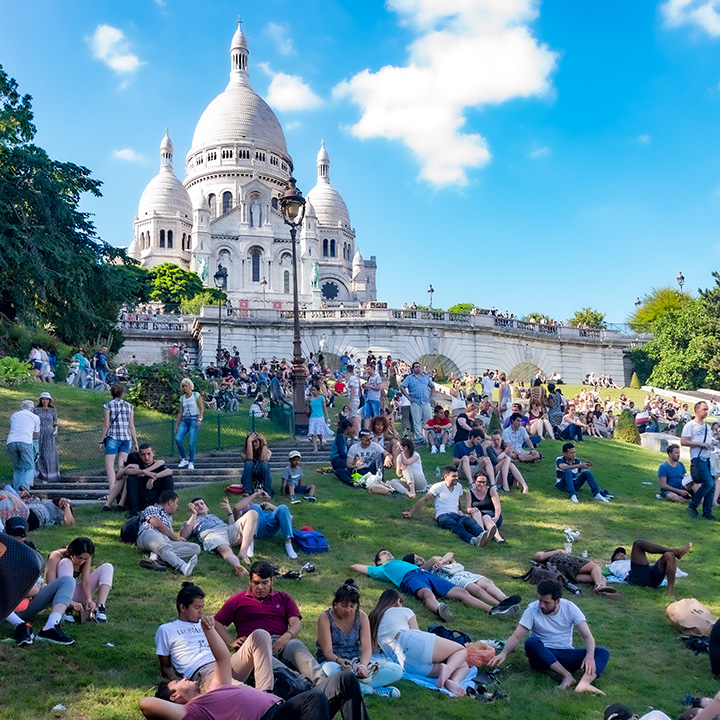
The Speed Test
WalkAppeal Test 3 is simple: how slow are people moving? The slower, the better. If everyone is walking really fast, the place is either really boring or dangerous. Walking at window-shopping speed is the best sign of an interesting place, and a close second is where people sit or better yet lie down.

The Sidewalk Cafe Test
Walk Appeal Test 4: Sidewalk cafes are the canary in the coal mine for good urbanism. If they thrive, the place almost certainly has good Walk Appeal. If not, go to City Hall and demand change. Cities should incentivize them, not tax them because they do so much good.

The Tourist Test
WalkAppeal Test 5 is the Tourist Test. Do people come to your city for good urbanism, or just for special events? These people came to Rome for Rome, not for a golf tournament. Aspire for your city to be so good that people come for your city, not just for special events.

The Play Test
WalkAppeal Test 6 is the Play Test, which asks "is this a good civic space, and is the place safe enough that parents will let their young kids play hide-and-seek there?" If they won't allow a kid to hide there, it's not safe enough there. Good urbanism provides many places like this.
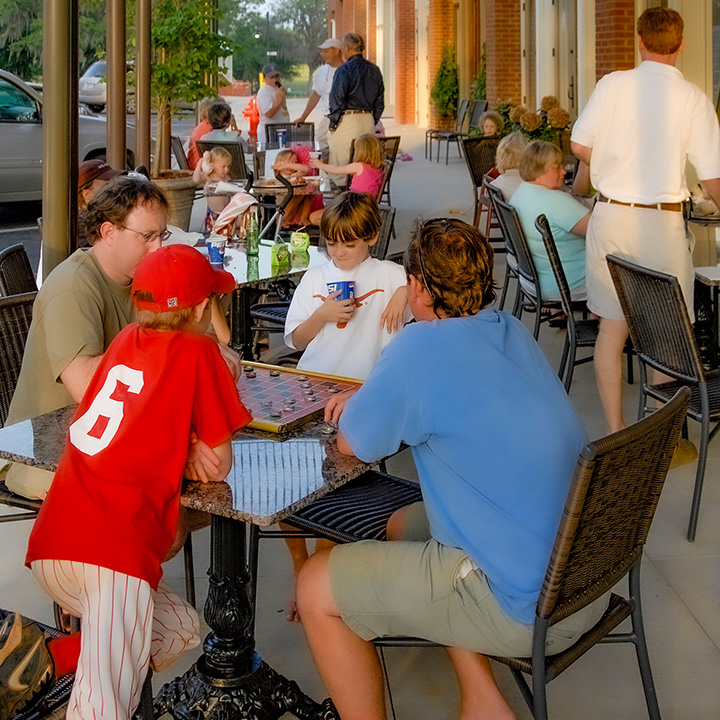
The Checkerboard Test
WalkAppeal Test 7 is the Checkerboard Test, which asks "do people break out a board and start playing checkers or chess?" If they do, the place is safe and (obviously) has both tables and chairs. That makes it almost as good as a sidewalk cafe. Incidentally, I found this; I didn't stage it.

The Pet-Friendly Test
WalkAppeal Test 8 is the Pet-Friendly Test, which asks "do people take their pets there?" If so, it's probably an appealing place because people love to enjoy places with their furry friends. If not, they're probably going there for utilitarian reasons, not for good urbanism.

The Photo Test
WalkAppeal Test 9 is the Photo Test, which asks "do people use your place as a backdrop for photos?" This is a test for beauty; if your place isn't appealing enough to be a backdrop, it's less likely to be a place people are drawn to walk.

The Wedding Test
WalkAppeal Test 10 is the Wedding Test, which asks "do people want to get married there?" If so, it's a safe place, an appealing place, and a great place for people to gather. And there's nothing more appealing than other people so it's probably a festive place of good urbanism.

The Halloween Test
WalkAppeal Test 11 is the Halloween Test, which asks "is it good for trick-or-treating?" If it's good for small kids on a night the goblins are out, it's a safe place. It's also likely a place where unexpected things can happen, which is interesting. Good urbanism does this in spades.

The Street Artist Test
WalkAppeal Test 12 is the the Street Artist Test, which asks "do street artists show up?" If so, vehicular traffic is likely very low, so it's probably a relatively quiet place. And because street artists depend on lots of foot traffic for their next portrait, there are probably many people walking by.
Useful Destinations
Beyond the 12 tests above, there are daily, weekly, and monthly needs that should be present in good urbanism, as The 15-Minute City makes clear. And for visuals, here's what I call our Web of Daily Life here in Tuscaloosa. I did another Web of Daily Life analysis when we were living in South Beach for comparison.
Wanda and I are big walking advocates, so our test for walking to useful stuff is 20 minutes, not 15. If you don't have time for the illustrated Web of Daily Life version above, here's the text version:
Work: I have a 7-step commute to work, and absolutely love it.
Groceries: Our main grocery is right at 20 minutes away, and there are four specialty groceries closer. I've learned that my carry limit is about 35 pounds, and by switching arms every block or so, it's an upper-body workout.
Pharmacy: Our pharmacy is right beside our main grocery. We're committed to staying as healthy as we can as deep into life as possible, so I haven't swallowed a single prescription pill in decades... actually, I don't even remember the last time. Our pharmacy therefore serves us more as a general store than a drug store.
Parks: We're within a 20-minute walk of four parks, and two more are short distances further on really interesting walks.
Gym: Tuscaloosa's downtown YMCA is just three blocks away; Wanda works out daily and teaches several classes per week, mostly on functional fitness for older folks.
Books: People have said for years that independent bookstores are dead, but they're making a comeback, and ours is excellent, and just five blocks away.
Post Office: The downtown post office even closer than the gym, at just two-and-a-half blocks away.
Bank: The walk to our bank is three blocks, about the same as the gym.
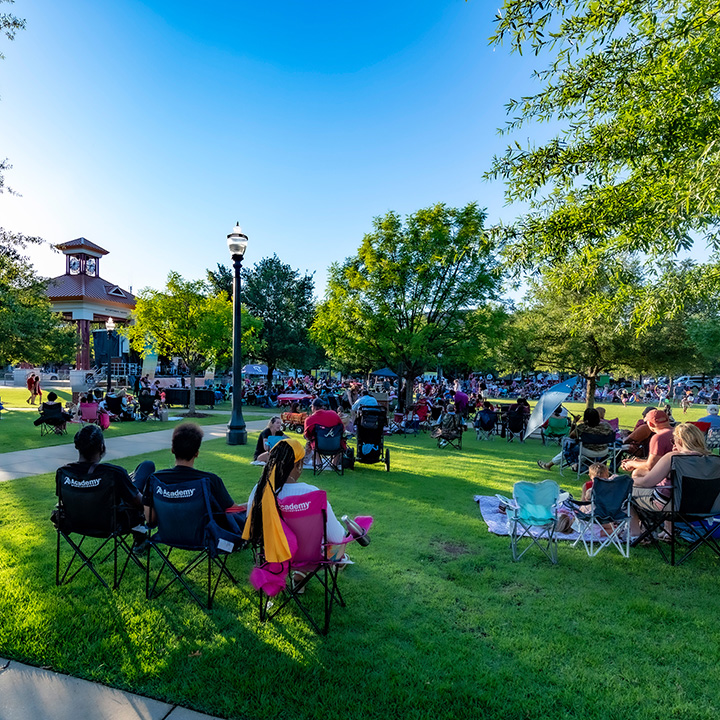
Civic Spaces: There are four civic spaces including Government Plaza pictured above which are 15 minutes or less of walking distance away; we enjoy them regularly.
Hospitality: I've lost count of how many food and drink establishments are within a 20-minute walk, but there are dozens.
Here's the most important thing about our proximity to these ten needs that mostly occur on a daily basis for us, with some being weekly or monthly: our home is in a sweet spot right at the edge of downtown and a 15-minute walk from the University of Alabama. Had we chosen to live in about 90% of the rest of the land within Tuscaloosa's city limits, we would have been living in the land of Auto Domination. And most cities and towns have sweet spots like ours where you can meet all these daily, weekly, and monthly needs on foot or bike. But those sweet spots are really small in most places, so if you want to meet your daily, weekly, and monthly needs with the embedded exercise and accompanying weight loss you have to choose your homeplace carefully.
Walk Appeal Tools
Some tools, most notably sidewalk cafes, are included in the Walk Appeal tests above, but are covered in greater detail in this section.

Living in the City
No single tool is a stronger contributor to Walk Appeal in the city than having a lot more people living in the city. The common NIMBY refrain for living in the city is that "it'll cause more traffic," but those living upstairs over the shops and other businesses are Naturally-Occurring Customers who don't need to drive to get there.
Doing business locally isn't the only thing to consider. Cities should also think carefully about their employment centers and seek to create more places to live around them, ideally calibrated to the income ranges of the people working in each of the employment centers because there's almost nothing that contributes more strongly to a prospering place than making a living where you're living.
Cities can do other things to help people make a living where they're living. In-office clerical work has dropped off significantly since 2020, so it's important for cities to encourage work-from-home settings. If they don't, the people may leave because working from home can be done almost anywhere on earth with a good internet connection for many types of work.
Smart suburbs should get in on the action on two counts. Most obviously, many corporate headquarters and also their regional offices have been more likely to locate outside the urban core in recent decades, so those suburbs should look at their employment centers just like the cities should as noted above.
The suburbs' angle on working from home could be more critical than what the cities face in a time-sensitive way. Those driven out of their workplaces in the city in 2020 and shortly afterward were conditioned to the urban amenities near where they once worked, and many consider working from home a boring alternative because the suburbs they call home have far fewer such amenities. The smartest suburbs should now be working overtime to build those urban amenities into their fabric, even if at a smaller scale than the new suburban workers once experienced around their city workplaces. And the smartest thing those suburbs should do is to code for Single-Crew Workplace all over town. The most important question for the work-from-home people isn't "how big are the new urban amenities," but rather "how many of the types of urban amenities I enjoyed in the city are being provided here?" Single-Crew Workplaces can deliver diversity of amenity types all over because each amenity can be very small.
Country towns have a similarly timely opportunity as the suburbs. The only downside is that types of work requiring proximity to certain places are less-suitably served by locations like country towns more distant from those places to which their work requires proximity, like a professor teaching at a university. Other than that, country towns should follow the same paths as noted for smart suburbs just now.
Street Trees
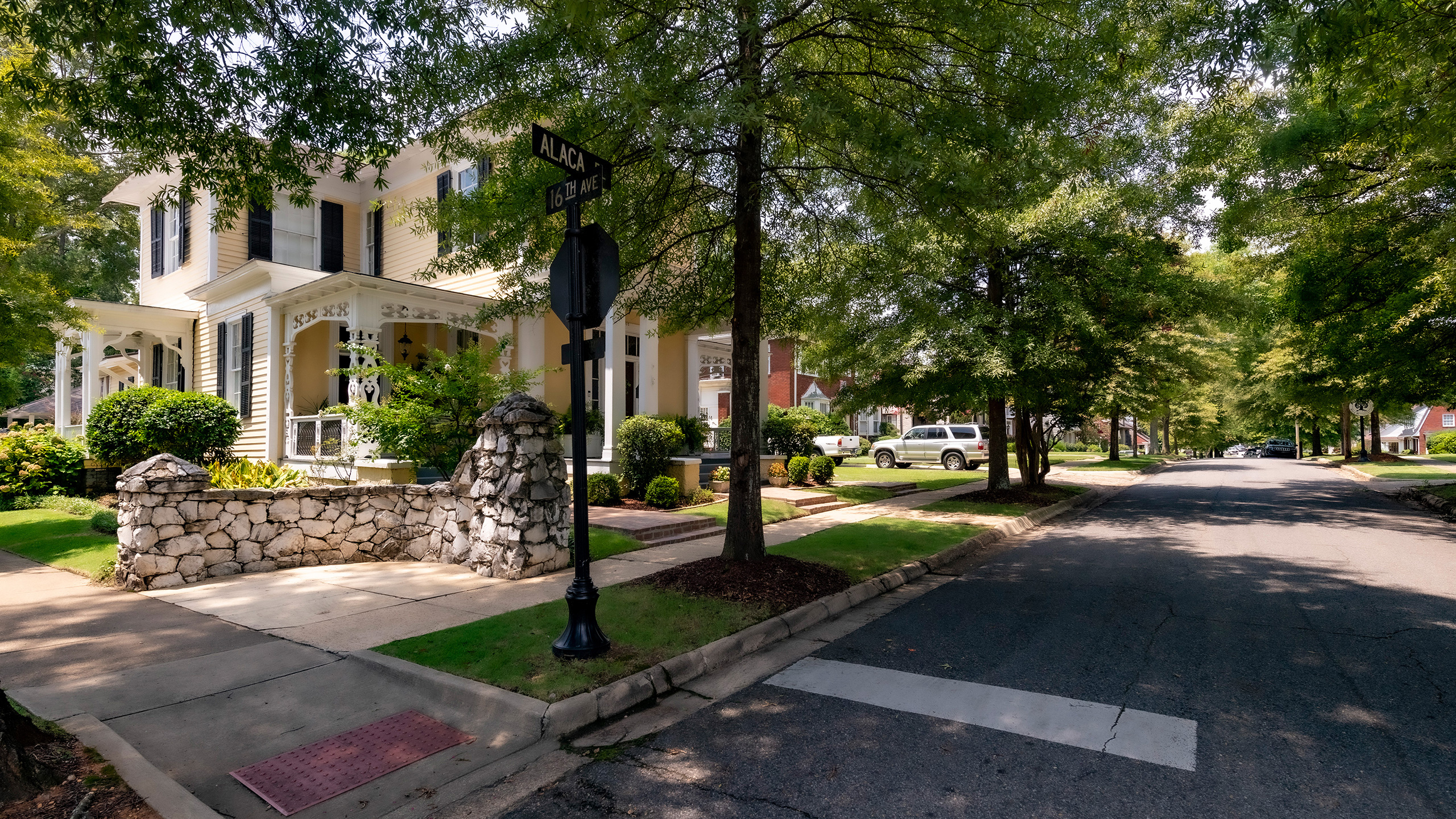
Of all the elements of urbanism you could incorporate into your city, town, or neighborhood, almost nothing has the breadth of positive ripple effects as street trees. They benefit economic health, environmental health, and public health in deeply interconnected ways. I could go on about this at length, but I already have in The Powerful Virtuous Cycles of Street Trees. It will surprise and even shock you in multiple beneficial ways. Don't trust me; see for yourself.

Sidewalk Cafes
People sitting outdoors are a great sign of good urbanism on many counts including: 1. Of all things in town, we find people most interesting. 2. They attract more people so the place thrives. 3. People sit where it feels like an outdoor room. This is another simple indicator of a complex condition: if you find people sitting in a place, that place is probably doing several good things for them that they might not even be able to explain.
Sidewalk cafes are so important to Walk Appeal that cities should give a tax break to every business with a sidewalk cafe. Properly priced, it would be one of the best investments a city could make, and on several counts. Sadly, our former home of Miami Beach used to tax sidewalk cafes a usage fee based on the number of seats at the cafe. This discourages thriving sidewalk cafes and reduces tax revenues, which is exactly the opposite of what smart cities should do. I hope Miami Beach has seen the light on sidewalk cafes in the years since we left.

Gifts to the Street
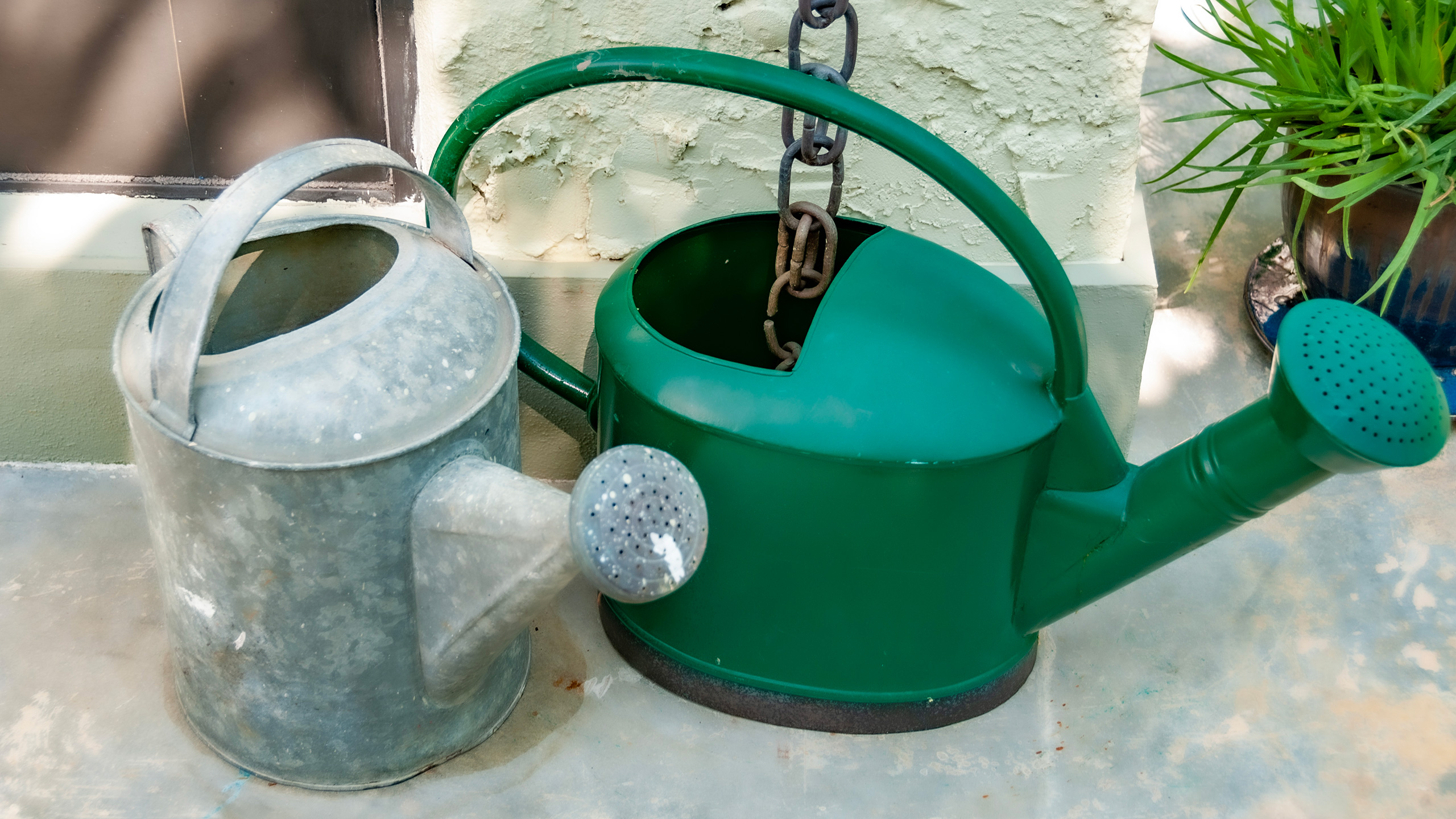
There are eight types of gifts to the street; those that shelter us (like arcades, galleries, and awnings), refresh us (like a street fountain or sidewalk cafe), delight us (like a beautiful frontage garden, including this one), direct us (like a goal in the middle distance), entertain us (like an good storefront), inform us (like a clock or sundial), help us remember (like a memorial), and give us a place to rest (like a street bench). A Gift to the Street doesn’t have to be expensive or time-consuming. These gifts probably cost very little and could be done over a weekend. If most buildings gave gifts to the street, think how much more appealing it would be to walk there! Good urbanism thrives on gifts like these.

Frontage Gardens
Some townhouses have frontage garden beds between the stairs & stoops; this one is paved entirely in brick, but with a frontage garden of potted plants which constitute a delightful Gift to the Street. There are no set formulas for frontage gardens, so start with what you have and do something that lifts your spirits because it'll likely do the same for your neighbors and others walking by.
Sidewalk Cafes
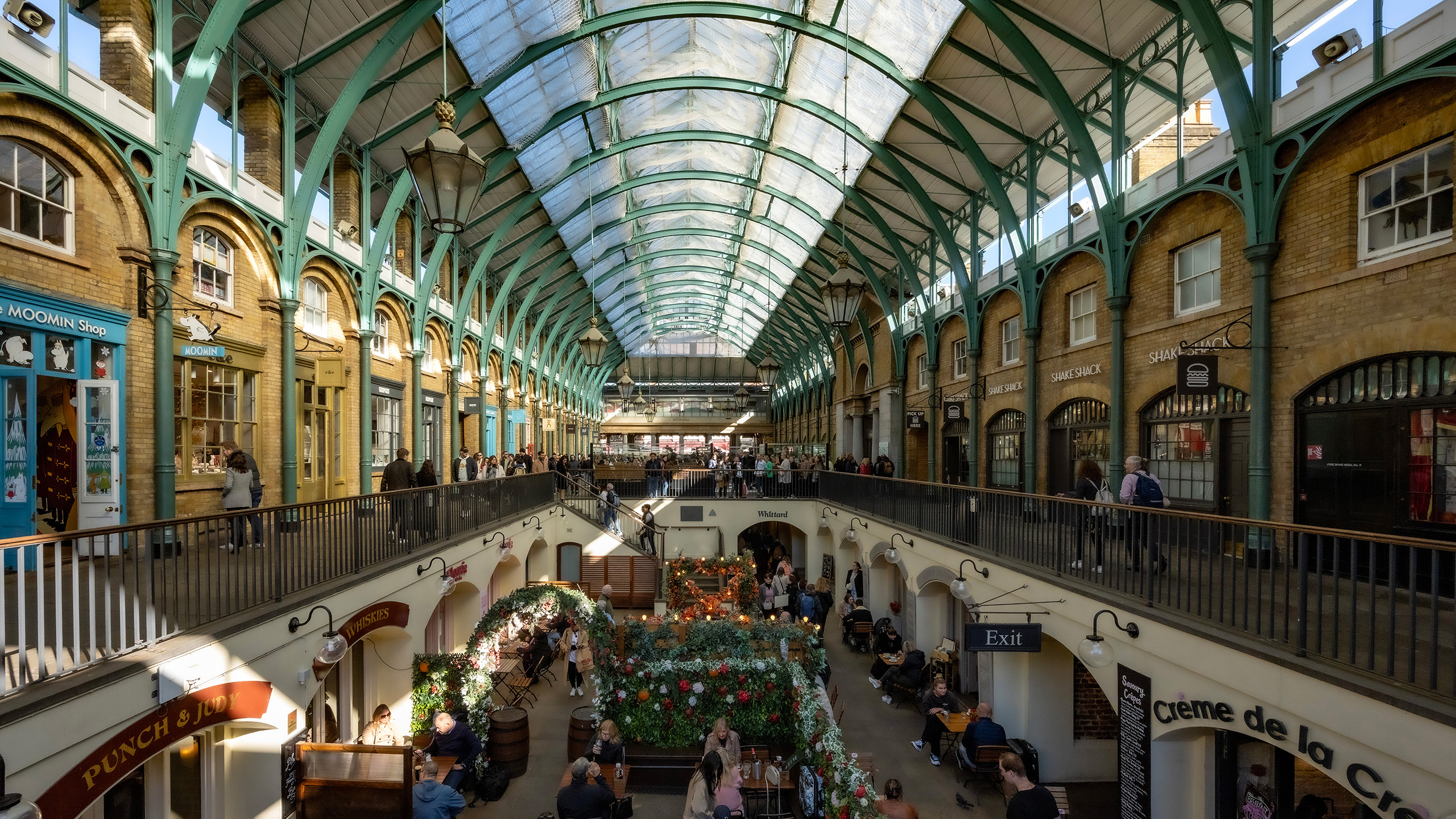
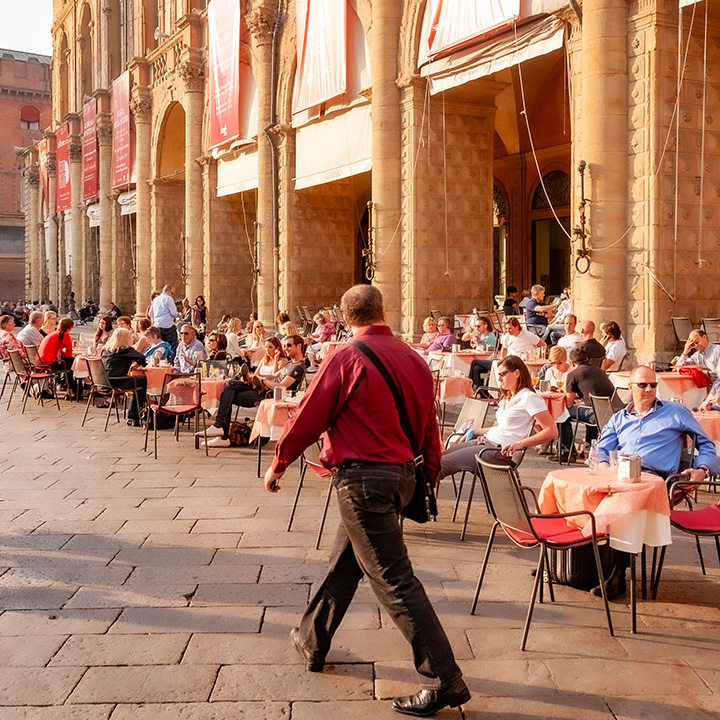
Sidewalk cafes are great Gifts to the Street and Walk Appeal superfood, and are great indicators of many beneficial things. They may shelter us like this arcade, they definitely refresh us with food and drink, they delight and entertain us with our dinner companions and other diners, and they give us a place to rest. They are also places to see and be seen, neighbors get acquainted there, people get acclimated to the local environment, their patrons provide organic Eyes on the Street, and they are harbingers of more prosperous times ahead... the list is long. See Sidewalk Cafes in Tools below.

Outboard Liner Building
The Outboard Liner Building is built outside the main building box. It can be single- or multi-story, covering part or all of the main building. This bakery is only about 15 feet deep & is a Gift to the Street for several reasons: It diverts eyes from the blank walls behind, it entertains those walking by with its sidewalk cafe, and that cafe is bolstered by seating inside as well which is quite open to view. The billboard? A crass commercial move, some say, but it's certainly more interesting than a blank wall.
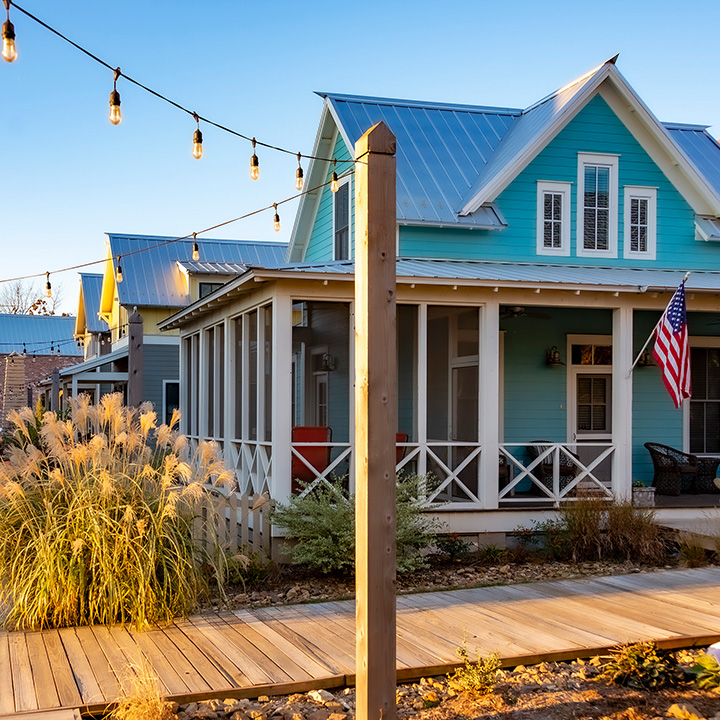
Boardwalks
The boardwalks of Carlton Landing are magical places accessible only on foot or bike as cars are relegated to rear parking courts, which allows surprisingly strong density, but technically the boardwalks are the street; a rarity on this list because it is both the street and the gift. The right-of-way is made up of boardwalks and bio-swales. Distance between building faces are as little as 25' and porches 12'. And it's richer in Gifts to the Street than almost any place I've seen.

Balcony or Gallery Garden
So much delight in so little space! French Quarter balconies are rarely much over 3 feet deep, but look at all the gardening the building's occupant is doing on this balcony! And what a Gift to the Street, and on multiple counts! It's not only a delightful frontage garden, but it's also entertaining because there's no way someone can love a garden as much as this person and not spend time there doing things other than working. And whether working or relaxing they're in a place where it's easy to get in conversations with people walking by.
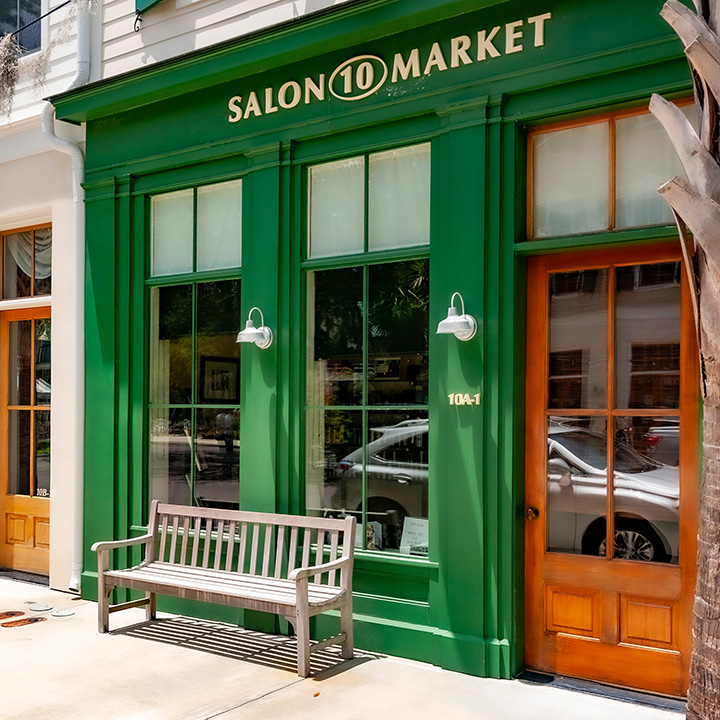
Storefront Bench
A storefront bench is a Gift to the Street that gives people a place to rest. It's especially useful at shops where not everyone in a group needs... or wants... to go in to shop. Those who are bench-sitting aren't just taking up space. They are first of all by far the most visible people at that shop. And because they're sitting where people walk by, there's a chance of conversations starting where they become part of the entertainment of the storefront to those walking.
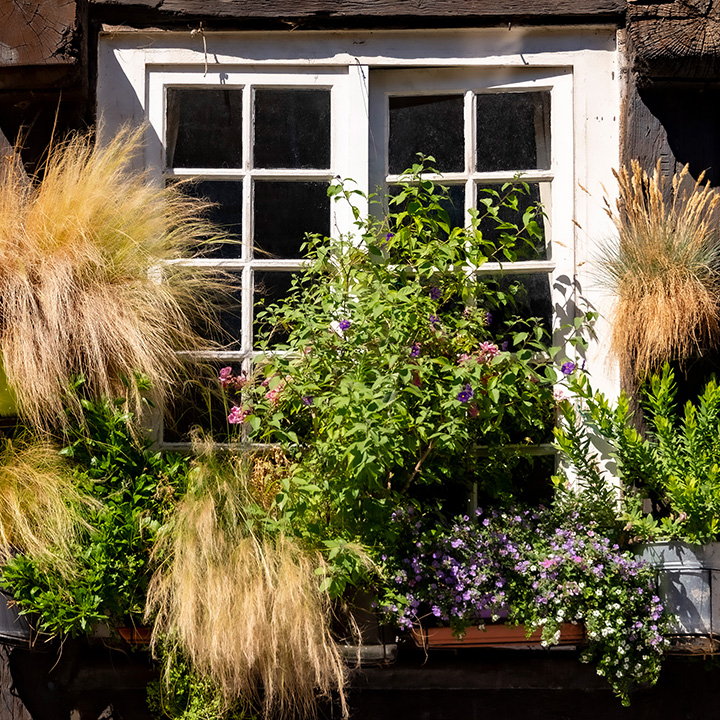
Window Garden
The smallest Gift to the Street is a boxed window garden. Few buildings in town have building elements with more delight per square inch than this one! And they can even be planted with herbs and other edibles, contributing in a tiny but very immediate way to making the neighborhood a nourishable place. This isn't farm-to-table; it's window-to-table.

Parapet Garden
Patterns transplant easily to places where they make sense. Plants on the parapet are a strong pattern in places like San Miguel de Allende, Mexico; this is Key West on the Caribbean Rim. Mexico is on the Echo Rim of the Gulf Of Mexico so both share several regional conditions, climate, and culture. As a result, it's no surprise this pattern travels well to the Keys. And of course they contribute in both settings to a delightful frontage garden.
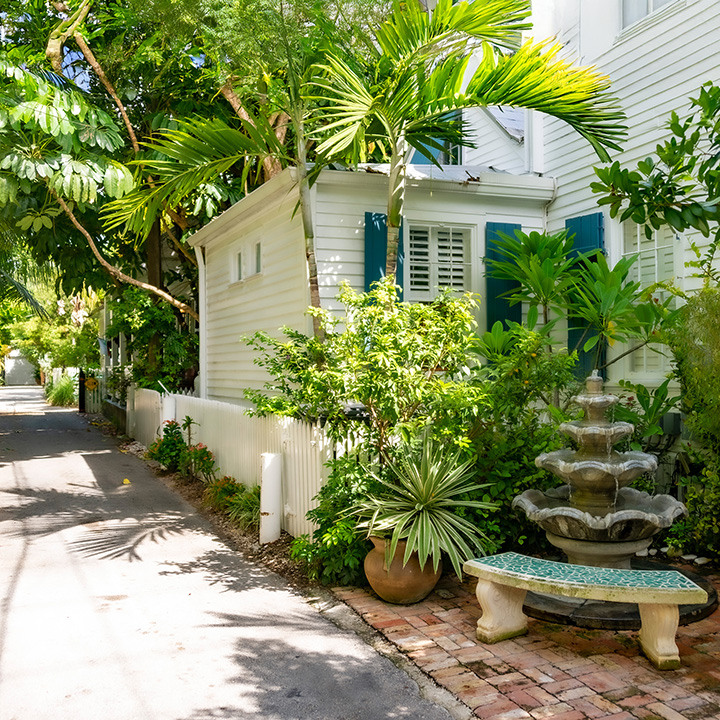
Gifts Compounded
Here's a compound Gift to the Street! It has both a fountain and a frontage garden for delight, and also a bench so someone can sit and rest after hours of exploring Key West. Actually, it's technically a Gift to the Lane because it's on a rear lane, not a street. If you've ever been to Key West and just stayed on the streets, you've missed some of the more interesting parts of the city. Next time you're there, be sure to explore its wealth of inner-block urbanism.

Seasonal Gifts
A Gift to the Street can be seasonal; both the festooning for the 4th of July and the flowers in the pots appear or change with the seasons. This is technically a frontage garden, even though the festooning isn't made of plant material. But it definitely boosts the level of delight.

Liner Buildings
Liner buildings are thin buildings used as borders between two characters of place or two uses that don't reinforce each other. A sea of parking in a surface parking lot, for example, is a welcome sight to almost nobody, so liner buildings screening a parking lot from a street where you're trying to strengthen Walk Appeal is a great idea. And in the picture above, it gets worse because the liner building isn't shielding a surface parking lot, but rather a multi-story parking deck, which is the place where the axe murderers come out at night in the movies, right? So hiding it is a civic good.
There are many other benefits of liner buildings. Look up Alicia, Courtyard Urbanist on Twitter/X. The gorgeous courtyard blocks she posts regularly are liner buildings shielding lushly planted kid-friendly courtyards inside. This works because they're made up of point-access structures that don't require interior double-loaded corridors because each super-thin unit has daylight (and ventilation when desired) on at least two sides... because they are liner buildings. There is no greater setting for raising kids in the city.
I could go on for hours on the many job descriptions of liner buildings, but here's just a couple more:
The Ponte Vecchio bridge in Florence? Those are liner buildings on both sides of the bridge so people can shop as they cross the river. And it's just one of many lined bridges globally. Most are bigtime Instagram moment spots.
Whether on bridges, in courtyard blocks, or hiding parking, shops in liner buildings have the best storefront-to-square footage ratio in retail because they're so thin. Ponte Vecchio shops average about 18 feet deep. Shops on the Pulteney Bridge in Bath, England are even less, at about 12 feet deep. This is awesome for retail because everything in each shop is in full view, both entertaining those walking by and also silently but persuasively inviting them in.

Open Streets
Countless auto-dominated streets around the world have become Open Streets since the pandemic began. Some have reverted to auto-domination, but many hold firm & people are learning the value of streets filled with people on foot and bikes over streets filled with cars.
Open Streets don't even need to be open all the time. This is Royal Street in the French Quarter of New Orleans. Both Royal and Bourbon, just one street over, are closed to cars so they can be open to people on foot and bikes for substantial parts of the day. Other streets open for months on end as a pilot project until the city and its leaders decide whether to leave it open in perpetuity or return it to auto domination. It's important for the pilot project to be able to open with uncertainty, otherwise the answer is almost always "no."

On-Street Parking
Since Open Streets began to open everywhere in 2020, on-street parking has generated plenty of debate, especially where it has been replaced with parklets and other tactical interventions. The biggest problem is the misunderstanding of on-street parking and its permanence, and how it fits in to Place Recovery. The worst (and often deadliest) places are those with Walk Appeal W0 - Unwalkable conditions such as arterial thoroughfares with high-speed traffic going by just a foot or two from a sidewalk upon which nobody in their right mind would walk. The best are Open Streets filled with people on foot and on bikes, most of which qualify as Walk Appeal W6 - Great Streets.
The problem is the years in between, as a thoroughfare matures in multiple steps from the worst conditions to the best, as urbanism rarely matures from "worst to first" in a single step. During those years on-street parking is really important for several reasons laid out here. So your town or city center should definitely aim for the best conditions at maturity, but should chart a path from bad to best that you can actually travel successfully. And it's really hard to do that without on-street parking in some of the middle years.
View Changes
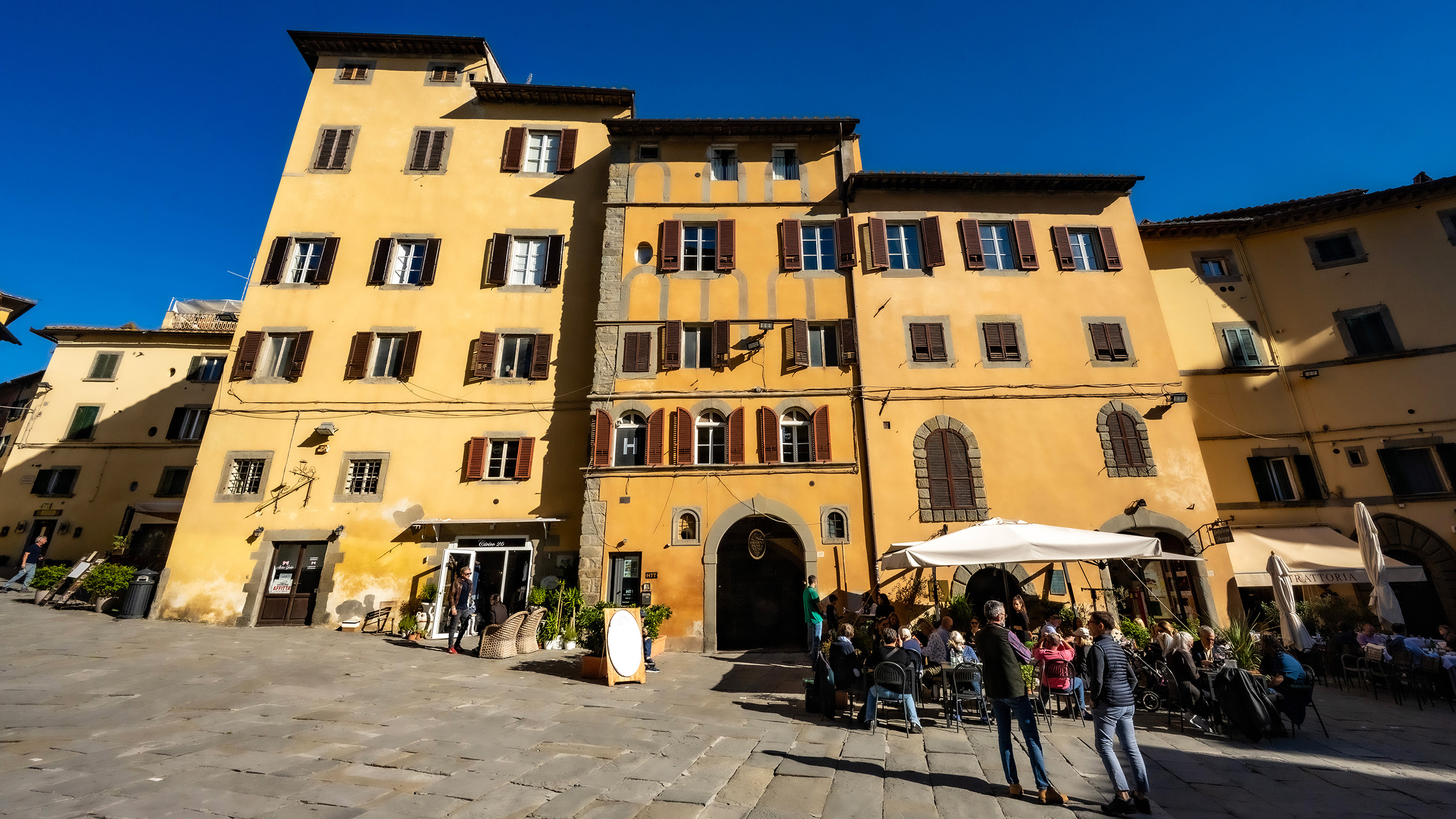
Great Storefronts are better if they're narrower because they entertain you better when you can walk past a storefront in five to eight seconds. It's not impossible for a huge department store with world-class window-dressers to entertain you with their work, but they get paid the big bucks for entertaining you across wide expanses of glass.
Storefronts alone are not the only way to change your view quickly. These buildings have few openings to their interiors, yet their widths are narrow, and the sidewalk cafes change your view by the moment because the width of any person sitting or standing there is far less than any medium-sized storefront. And I can walk from one side of this scene to the other in about twenty seconds, during which time my view would change almost with each footstep. So there are many tools for changing views; use the ones that make sense in your place.

Street Enclosure
The best streets in the world tend to have an enclosure proportion of 1:1 or a bit taller. Enclosure is the proportion of building height divided by street width from building face to building face. Too tall, and the street is dark; too low, and it doesn't feel like an outdoor room. US Main Streets struggle to achieve a 1:3 proportion because transportation engineers force streets to be wider than necessary; at less than 1:6 all sense of enclosure is lost.
When enclosure is lost, the main event on the street is the traffic, making it a less appealing place to walk. When enclosure is gained, either by building closer to the street or building taller, the main event is the public outdoor room created by the enclosure, making it feel more like it's a place for the people walking and biking than the cars driving. Better enclosure also tends to slow traffic because there are more visual cues to process than on a wide-open road.

Shelter
Awnings, galleries, colonnades, and arcades all shelter a building edge from sun and rain to varying degrees, acting as a Gift to the Street (more on that momentarily). Doing so not only protects those walking by from the elements, but on a Main Street or High Street, they also reduce glare on storefront windows so it's easier to see what's for sale inside. This is a win-win for both shoppers and shops.

Goal in the Middle Distance
A Goal in the Middle Distance, or “terminated vista,” as some planners call it, entices you to keep walking past stretches of street that might not have great Walk Appeal. If there are businesses along the street, this benefits the local economy by bringing customers in from further away.

Sidewalk Width
The ideal width of a sidewalk depends on its context, but if sidewalks aren't at least five feet wide, your town isn't serious about walkability, much less Walk Appeal. Two people can't walk comfortably side-by-side on a four-foot sidewalk, and two people passing each other have to turn sideways to pass without bumping each other. A five foot sidewalk is the minimum serious sidewalk, and six feet is better. In the post-Pandemic era an eight-foot sidewalk is better still as people can maintain social distancing. In mixed-use areas, a ten foot sidewalk allows people to shop at modest retail displays, while fourteen feet is the minimum width on which to set up a sidewalk cafe, which can extend to a width of twenty feet or more.

Turning the Corner
A key to Walk Appeal is turning the corner well. Enticing customers from side streets does wonders for neighborhood businesses. There’s a strong retailing misconception that side walls should be blank, but a place will do much better with storefront all along the side wall. What retailers don't realize is that they can simply flip the shelves and aisles. When you put an aisle on a side wall with lots of windows, the people walking by get a great look at all the things for sale. The smartest retailers quickly learn to put their most enticing products on those outward-facing shelves.
Search the Original Green Site
Buy the Original Green book on Amazon

Rather Buy Indie?
Contact Sundog Books at Seaside, which is our favorite bookstore ever!
Speaking
I speak on the Original Green across the US and abroad. Would you like for me to speak (via Zoom these days) at your next event?

Got an idea?
If you have an idea for a story, or know about work we need to feature...
Subscribe
... to receive periodic Original Green news releases. Here's our full Privacy Policy, where you'll see that we will not share your info with anyone else, nor will we sell it to anyone. All three fields required.
Home
Origins
Foundations
Nourishable Accessible Serviceable Securable Lovable Durable Adaptable Frugal Education Economy Culture Wellness
Resources
Original Green Scorecard Initiatives Presentations Reading List Quotes Links Tweetroll
Stories
OGTV
Media Room
Bios Press Speaking
© 2021 Mouzon Design, Inc.